Call: 08045803781
 Send Inquiry
 Send Inquiry
Solid Carbide Ball Nose End Mill - HSS endmill
MOQ : 1 Piece
Solid Carbide Ball Nose End Mill - HSS endmill Specification
- Cutting Speed
- 50-150 m/min
- Cutting Force
- Reduced force due to ball nose geometry
- Operate Method
- CNC and manual operation
- Drill Bits Types
- Endmill - Ball Nose
- Cutting Capacity
- Suited for both roughing and finishing
- Hardness
- 55-60 HRC
- Coating
- TiAlN (Titanium Aluminium Nitride)
- Operation Type
- Slotting, contouring, pocketing, profiling
- Material
- Solid Carbide
- Cutting Accuracy
- High precision
- Tool Type
- End Mill
- Coating Type
- TiAlN
- Length
- 50 mm - 100 mm
- Cutter Type
- Ball Nose End Mill
- Machine Type
- CNC Milling Machine
- Shape
- Ball Nose
- Features
- High wear resistance, long tool life, fine surface finish
- Diameter
- 2 mm - 12 mm
- Maximum Torque
- Up to 8 Nm depending on diameter
- Processing Type
- Milling
- Shank Type
- Straight shank
- Number of Flutes
- 2, 4 or 6 Flutes
- Recommended Applications
- Die & mould, 3D machining, engraving, cavity processing
- Package
- Individual plastic box or set packaging
- Finish Type
- Mirror polished
- Resharpening
- Possible multiple times
- Suitable Material
- Steel, Cast Iron, Stainless Steel, Non-ferrous metals
- Cooling
- Dry and wet machining compatible
About Solid Carbide Ball Nose End Mill - HSS endmill
Solid Carbide Ball Nose End Mill - HSS endmill
Our solid carbide end mill program offers special solutions for almost every cutting task: Solid carbide roughing end mills and finishing end mills in various designs and lengths, a special end mill program for Aluminium machining, and solid carbide miniature router from 0,3 mm up to 3 mm.
For milling operations in all materials. HAM offers a large endmill program. Furthermore, you will also find in our standard program special tools such as cutters for hard material up to 62 HRC, engraving bits, face milling cutters and saws or thread milling cutters.
All of our milling tools are available with the newest coatings and can be easily matched according to your particular demands.
Versatile Applications for Professional Milling
Engineered for a range of materials such as steel, cast iron, stainless steel, and non-ferrous metals, this ball nose end mill is ideal for die and mould making, 3D machining, engraving, and cavity processing. Compatible with various CNC and manual operations, its designed to provide consistent high-precision results in both roughing and finishing applications.
Exceptional Tool Life and Surface Quality
The solid carbide construction combined with a TiAlN coating ensures high wear resistance, reduced cutting force, and long service life. The mirror-polished finish delivers a fine surface quality on workpieces, maintaining accuracy and efficiency even during intensive milling operations.
FAQs of Solid Carbide Ball Nose End Mill - HSS endmill:
Q: How does the TiAlN coating benefit the Solid Carbide Ball Nose End Mill?
A: The Titanium Aluminium Nitride (TiAlN) coating substantially enhances wear resistance and heat stability, allowing the end mill to maintain high cutting speeds and extend its operational lifespan even when machining tough materials.Q: What types of materials can this end mill process effectively?
A: This ball nose end mill is engineered for machining steel, cast iron, stainless steel, and non-ferrous metals, making it highly suitable for a wide array of industrial and precision applications.Q: When should I select a specific number of flutes (2, 4, or 6) for my milling operation?
A: The flute count depends on your application: 2 flutes are ideal for high chip removal in softer metals, 4 flutes provide a good balance for stainless steel or cast iron, while 6 flutes are suited to harder materials and finishing tasks, ensuring optimal chip evacuation and surface finish.Q: Where is this product commonly used?
A: These end mills are widely used in tool rooms, automotive workshops, die & mould sectors, and precision engineering industries. They are distributed by exporters, importers, and suppliers throughout India.Q: What is the recommended process for resharpening these end mills?
A: These end mills can be resharpened multiple times using appropriate tool grinding equipment. Resharpening helps maintain cutting accuracy and prolongs tool life, especially in high-precision applications.Q: How should I use this tool for optimal results in both dry and wet machining?
A: For optimal performance, select appropriate cutting parameters based on the material and use either dry or wet machining as required. Utilizing proper cooling methods in wet machining enhances tool life and surface finish, while dry machining is suitable for less heat-sensitive jobs.Q: What are the main benefits of using a ball nose geometry in milling?
A: The ball nose geometry reduces cutting force, enabling smoother operation and making it up suitable for complex 3D profiles, die & mould work, and fine detailing, resulting in improved surface quality and contour accuracy.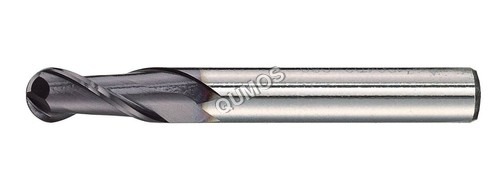
Tell us about your requirement

Price:
Quantity
Select Unit
- 50
- 100
- 200
- 250
- 500
- 1000+
Additional detail
Mobile number
Email

More Products in Engineering Cutting Tools Category
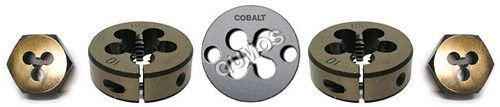
Threading Die
Price 353 INR
Minimum Order Quantity : 1 Piece
Operation Type : Other, External Thread Cutting
Coating : Uncoated
Hardness : HRC 6065
Operate Method : Manual

Hob Cutter
Price 1000 INR
Minimum Order Quantity : 1 Piece
Operation Type : Other, Continuous or single indexing
Coating : Uncoated or optional TiN/TiAlN
Hardness : HRC 5862
Operate Method : CNC machine or manual operation
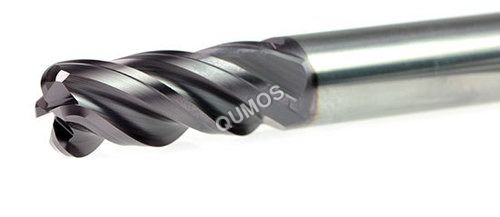
Corner Radius End Mill - Rounde Edge Endmill
Price 553 INR
Minimum Order Quantity : 1 Piece
Operation Type : Finishing and rounding edge operations, Other
Coating : Titanium Aluminum Nitride (TiAlN)
Hardness : High hardness carbide material
Operate Method : Automatic (CNC operation)
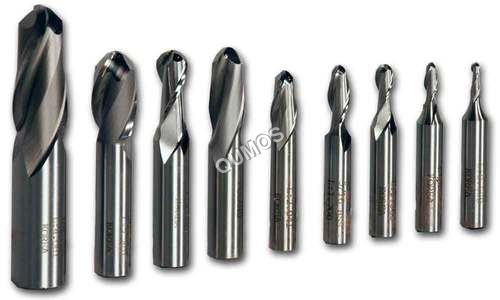
Ball End Mill - HSS Endmill
Price 353 INR
Minimum Order Quantity : 1 Piece
Operation Type : Other, Rotational Cutting
Coating : None or Basic
Hardness : Highspeed steel (HSS)
Operate Method : Manual or CNC

Contact Details
QUMOS ENTERPRISES
GST : 27AAYPU0913C1ZH
- Shop No.1,12, Nagdevi Cross Lane, 70, Mohammedali Road, Mohammedi Manzil,Mumbai - 400003, Maharashtra, India
- Phone :08045803781

 Send Inquiry
Developed and Managed by Infocom Network Private Limited.
