Call: 08045803781
 Send Inquiry
 Send Inquiry
Dial Thickness Guage
MOQ : 1 Piece
Dial Thickness Guage Specification
- Cutting Force
- Manual Pressure
- Material
- Hardened Stainless Steel, Alloy Metal
- Length
- Approx. 120 mm
- Features
- Easy-to-read dial, Zero adjustment, Portable
- Hardness
- Body made from hardened steel
- Machine Type
- Hand Tool
- Coating
- No special coating
- Tool Type
- Thickness Guage
- Operation Type
- Manual
- Operate Method
- Manual, Lever Operated
- Shape
- Rectangular Body with C-Shaped Measuring Jaw
- Cutting Accuracy
- 0.01 mm (Dial Gauge Resolution)
- Diameter
- Measuring Jaw Diameter: Approx. 1015 mm
- Processing Type
- Measuring Instrument
- Dial Graduation
- 0.01 mm
- Color
- Blue Frame with White Dial
- Operating Temperature
- 5°C to 40°C
- Weight
- Approx. 200 g
- Measuring Faces
- Carbide-Tipped/Flat and Parallel Faces
- Usage
- Laboratory, Quality Control, Industrial, Educational
- Accuracy
- ±0.02 mm
- Application
- Paper, Sheet Metal, Film, Leather, Plastics, Textile Thickness Measurement
- Display Type
- Analog Dial
- Packaging Type
- Box
Dial Thickness Guage Trade Information
- Minimum Order Quantity
- 1 Piece
- Supply Ability
- 10000 Pieces Per Week
- Delivery Time
- 1-7 Days
About Dial Thickness Guage
A dial thickness gauge is a precision measuring instrument used to measure the thickness of various materials with high accuracy. It consists of a round dial indicator mounted on a frame with a measuring rod or anvil. The gauge is equipped with a sensitive spring-loaded plunger or contact point that makes contact with the material's surface. As the contact point presses against the material, the dial indicator displays the thickness measurement in millimeters or inches, depending on the unit of measurement.
FAQ:
Q: What is a Dial Thickness Gauge?
A: dial thickness gauge is a handheld measuring tool designed to determine the thickness of different materials, including paper, plastic, rubber, fabric, metal sheets, and more. It provides precise and reliable thickness measurements for quality control and inspection purposes.
Q: How does a Dial Thickness Gauge work?
A: The dial thickness gauge works on the principle of a dial indicator. When the gauge's contact point comes in contact with the material's surface, the dial indicator's needle moves, displaying the thickness measurement on the dial face.
Q: What are the advantages of using a Dial Thickness Gauge?
A: Dial thickness gauges offer several advantages, such as high accuracy, ease of use, portability, and quick measurements. They are ideal for quality control in manufacturing, ensuring uniform thickness in materials, and identifying deviations from specified thicknesses.
Q: Where are Dial Thickness Gauges used?
A: Dial thickness gauges are used in various industries, including manufacturing, printing, paper production, plastic processing, automotive, and aerospace. They are commonly used for quality control, material testing, and product inspection.
High Precision for Diverse Applications
Engineered for versatility, this dial thickness gauge is suitable for measuring a range of materials from delicate films to rigid sheet metals. The 0.01 mm dial graduation and 1015 mm jaw diameter cater to both fine and general thickness assessment, ensuring adaptability for laboratory analysis, industrial inspections, and quality assurance in the field.
Robust Engineering and User-Friendly Design
Manufactured from hardened stainless steel and alloy metals, and finished in a blue frame with a white dial, the tool promises durability with a professional appearance. Its zero adjustment feature, easy dial readability, and lever-operated manual pressure ensure effortless operation, making it suitable for both seasoned professionals and trainees.
FAQs of Dial Thickness Guage:
Q: How do I use the dial thickness gauge for accurate measurements?
A: To obtain accurate measurements, place your sample between the carbide-tipped, flat, and parallel faces of the measuring jaw. Apply gentle, manual lever pressure until the faces contact the material, ensuring even contact. Read the thickness value directly from the analog dial, which displays graduations of 0.01 mm.Q: What materials can this thickness gauge measure effectively?
A: This dial gauge is designed for a comprehensive range of materials, including paper, sheet metal, leather, plastic films, textiles, and other similar substrates. Its carbide-tipped measuring faces ensure reliable results across soft, flexible, and rigid materials.Q: Where is the best location or environment to operate this tool?
A: The gauge is suitable for a wide range of environments, such as laboratories, industrial quality control stations, educational settings, or any controlled workspace. For optimal performance, operate within the temperature range of 5C to 40C.Q: What is the benefit of the analog dial display and can the dial be adjusted to zero?
A: The analog dial is large and clear, providing immediate readings without the need for electronic power, ideal for quick reference. The tool also allows for zero-point adjustment, ensuring ongoing accuracy before each use.Q: How does the manual operation of this thickness gauge work?
A: Operation is manual and lever-based. The user applies moderate hand pressure on the lever to close the measuring jaws around the material, making it simple, efficient, and requiring no external power or batteries.Q: What sets this thickness gauge apart in terms of durability and construction?
A: The body is crafted from hardened stainless steel and alloy metal, providing high resistance to wear and ensuring longevity. Carbide-tipped faces enhance measuring consistency and maintain accuracy over time, even with frequent industrial or educational use.Q: When should this gauge be used for measurement processes?
A: This gauge is ideal whenever precise thickness measurements are required, such as before quality control checks, during production, or for educational demonstrations in material science. Use it as part of standard measurement procedures to validate material specifications.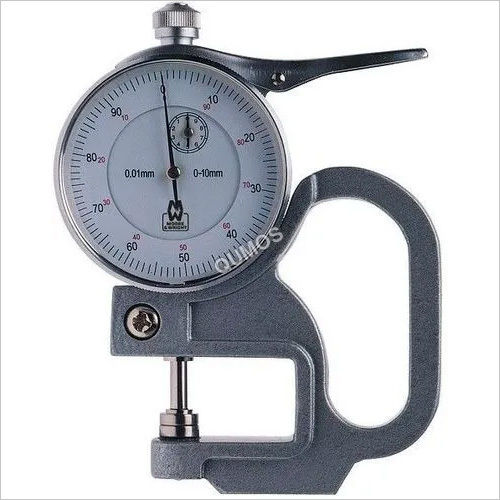
Tell us about your requirement

Price:
Quantity
Select Unit
- 50
- 100
- 200
- 250
- 500
- 1000+
Additional detail
Mobile number
Email

More Products in Precision Measuring Instruments Category
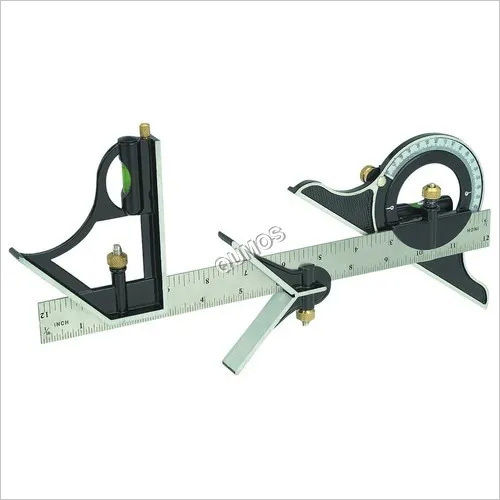
Combination Set
Price 1053 INR
Minimum Order Quantity : 1 Set
Features : Multifunctional tool with measurement leveling and angle finding capabilities
Material : Stainless steel and cast iron, Others
Tool Type : Combination set
Operate Method : Manual operation
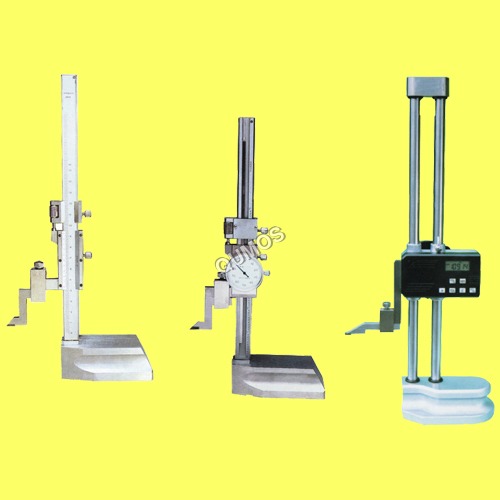
Height Guage
Price 5300 INR
Minimum Order Quantity : 1 Set
Features : Corrosion resistant, Fine graduation, Rigid construction, Clear markings
Material : Stainless Steel
Tool Type : Measuring Tool
Operate Method : Manual
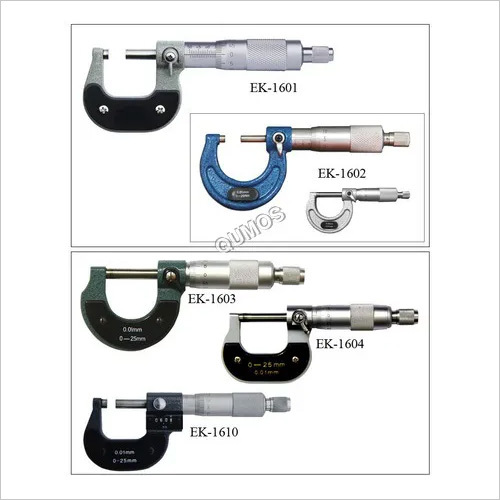
Micrometer Screw Guage
Price 1053 INR
Minimum Order Quantity : 1 Piece
Features : Compact Durable Multiple Models Available (EX1600 EX1602 EX1603 EX1604 EX1610)
Material : Metal
Tool Type : Micrometer Screw Gauge
Operate Method : Manual operation

Contact Details
QUMOS ENTERPRISES
GST : 27AAYPU0913C1ZH
- Shop No.1,12, Nagdevi Cross Lane, 70, Mohammedali Road, Mohammedi Manzil,Mumbai - 400003, Maharashtra, India
- Phone :08045803781

 Send Inquiry
Developed and Managed by Infocom Network Private Limited.
