Call: 08045803781
 Send Inquiry
 Send Inquiry
Carbide Insert Threading Vardex Korloy Kyocera Taegutec Sandvik Widia Kennametal Ceratizit Walter
MOQ : 1 Piece
Carbide Insert Threading Vardex Korloy Kyocera Taegutec Sandvik Widia Kennametal Ceratizit Walter Specification
- Cutting Accuracy
- 0.01 mm
- Coating
- CVD, PVD, TiN, TiAlN, TiCN
- Operate Method
- Automated/CNC compatible
- Operation Type
- Continuous/Intermittent
- Tool Type
- Threading Insert
- Cutter Type
- Internal and External threading
- Machine Type
- CNC Lathe, Turning Centers
- Hardness
- 92-94 HRA
- Length
- Insert lengths: 10-25 mm
- Material
- Ultrafine grain carbide
- Features
- High wear resistance, Precision threading, Optimized chip control
- Cutting Force
- Low to medium
- Cutting Capacity
- Suitable for threading ranges M1-M150
- Coating Type
- Multi-layer PVD/CVD
- Cutting Speed
- Up to 350 m/min
- Drill Bits Types
- N/A (application: threading inserts)
- Shape
- Triangle, Square, Round, Diamond
- Diameter
- Insert sizes: 6 mm 30 mm
- Maximum Torque
- 80 Nm
- Processing Type
- Threading, Turning, Grooving
- Compatible Brands
- Vardex, Korloy, Kyocera, Taegutec, Sandvik, Widia, Kennametal, Ceratizit, Walter
- Thread Profile
- ISO Metric, UN, BSPT, NPT, WT, ACME
- Surface Finish Capability
- Ra < 0.8 m
- Insert Standard
- DIN, ANSI, JIS
- Packaging
- Box of 10 inserts
- BladeSize
- Varies by insert type: 11-22 mm
- Grade Options
- VP15TF, PC9030, TT8115, GC1125, HC4115 (depends on brand)
- Application Industry
- Automotive, Aerospace, Oil & Gas, General Machining
- Chipbreaker Design
- Available in multiple chipbreaker geometries
- Temperature Resistance
- Up to 800C
- Life Cycle
- Long life due to high toughness and coating structure
- ISO Classification
- ISO4/ISO5
- Insert Corner Radius
- 0.2 mm 0.4 mm
- Reusability
- Indexable and replaceable
- Coolant Compatibility
- Through-coolant available in select models
About Carbide Insert Threading Vardex Korloy Kyocera Taegutec Sandvik Widia Kennametal Ceratizit Walter
Carbide Insert Threading Vardex Korloy Kyocera Taegutec Sandvik Widia Kennametal Ceratizit Walter
We have a carbide grade to effectively thread almost any material. In addition to its general purpose grades, any threading insert can be coated in a specialty grade for the most demanding machining tasks. Our grade is the industry's best answer for machining stainless steel in high-production environments.
Carbide tips,carbide brazed inserts,carbide tipped inserts,carbide indexable tips,carbide saw tips,
Cutting, mining, saw tips, bars for crusher, dies, rods and other special carbide products. These products are mainly used in metal products industry, mining industry, machinery processing industries, etc.
boring tool, grooving tools and periphery turning tools. The inserts are sorted as clamped inserts, wood-cutting tools, milling & turning inserts, etc.
Many inserts for mining tools are made of tungsten carbide. Mining and tunneling cutting tools are fitted with Cemented Carbide tips so it is called "Button Bits". Only man-made diamond may replace the Cemented Carbide buttons when conditions are ideal, but as rock drilling is a tough task, Cemented Carbide button bits remain the most used type throughout the world.
Carbide inserts for metal cutting. Cemented carbide is easy to chipping and breaking. The carbide cutting tip is usually in the form of a small insert for a larger tipped tool whose shank is made of another material, usually carbon tool steel. Most modern face mills use carbide inserts, as well as many lathe tools and end mills and CNC.
Exceptional Threading Versatility
Suitable for a broad spectrum of thread profiles including ISO Metric, UN, BSPT, NPT, WT, and ACME, these carbide insert threading tools are compatible with most major brands. Their indexable and replaceable nature streamlines continuous or intermittent operations on CNC lathes and turning centers, enhancing efficiency across diverse industries.
Advanced Coating and Chip Control Technology
Insert coatings such as multi-layer CVD and PVD (TiN, TiAlN, TiCN) provide superior hardness (9294 HRA) and wear resistance, ensuring longer life cycles. Multiple chipbreaker geometries optimize chip control for smoother operations and consistent surface finishing down to Ra < 0.8 m.
Superior Performance in Demanding Applications
Designed for high-speed threading (up to 350 m/min) with precision (0.01 mm accuracy), these inserts operate reliably under high temperatures (up to 800C). Their ultrafine grain carbide structure supports low-to-medium cutting forces across threading ranges M1M150, ensuring high productivity and durability for automotive, aerospace, and oil & gas sectors.
FAQs of Carbide Insert Threading Vardex Korloy Kyocera Taegutec Sandvik Widia Kennametal Ceratizit Walter:
Q: How do I select the appropriate carbide threading insert for my application?
A: Choosing the right threading insert depends on your thread profile standard (ISO Metric, UN, BSPT, NPT, WT, ACME), required grade (e.g., VP15TF, PC9030, TT8115), and machining conditions. Refer to your machine compatibility, thread size, desired surface finish, and application industry to match the suitable brand and insert specification.Q: What are the main benefits of using multi-brand carbide threading inserts in CNC operations?
A: Using compatible carbide threading inserts across Vardex, Korloy, Kyocera, and others ensures flexibility in procurement, high cutting speeds, low cutting forces, and robust performance at elevated temperatures. Their advanced coatings and optimized chipbreaker design lead to extended tool life and precise threading with excellent surface quality.Q: When should I replace or index threading inserts during production?
A: You should replace or index threading inserts when you observe increased tool wear, reduced surface finish quality, or noticeable drops in threading precision. Replacing inserts from their box pack (10 per box) ensures continuous, uninterrupted machining and maintains high threading standards.Q: Where can these carbide threading inserts be used effectively?
A: These inserts are well-suited for automotive, aerospace, oil & gas, and general machining applications. They perform optimally on CNC lathes and turning centers for both internal and external threading, offering versatility across different thread profiles and material types.Q: What is the process for installing and using threading inserts on CNC machinery?
A: Installation involves inserting the carbide threading tool into the compatible CNC lathe or turning center holder, securing it to manufacturer-recommended torque settings (up to 80 Nm). Select the correct insert geometry, size, and coating for your threading operation, then set up cooling (through-coolant models when required) and begin the machining cycle.Q: How do these inserts enhance threading accuracy and lifespan in manufacturing?
A: Precision engineering (0.01 mm accuracy), advanced coatings, and optimized chip control mechanisms ensure minimal wear, improved threading accuracy, and extended life cycles, even during high-speed or high-temperature operations. The indexable, replaceable design allows for consistent performance and cost-effective tool management.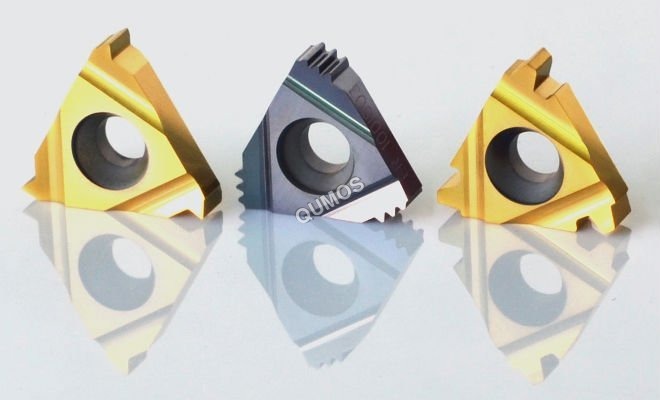
Tell us about your requirement

Price:
Quantity
Select Unit
- 50
- 100
- 200
- 250
- 500
- 1000+
Additional detail
Mobile number
Email

More Products in Engineering Cutting Tools Category
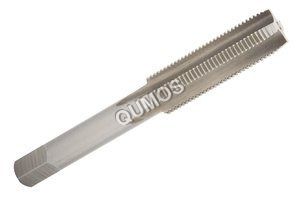
STI Tap - Threading HSS
Price 353 INR
Minimum Order Quantity : 1 Set
Tool Type : STI (Screw Thread Insert) Tap
Cutter Type : Thread Tap Cutter
Processing Type : Internal Threading (Screw Thread Insert)
Material : Others, High Speed Steel (HSS)
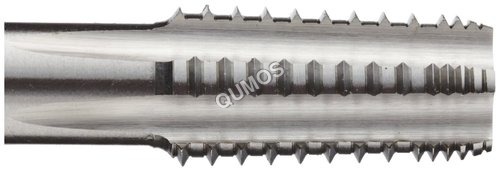
Interrupted Thread Tap
Price 1521 INR
Minimum Order Quantity : 1 Set
Tool Type : Cutting Tool
Cutter Type : Thread Tap
Processing Type : Metalworking
Material : Others, HighSpeed Steel (HSS)
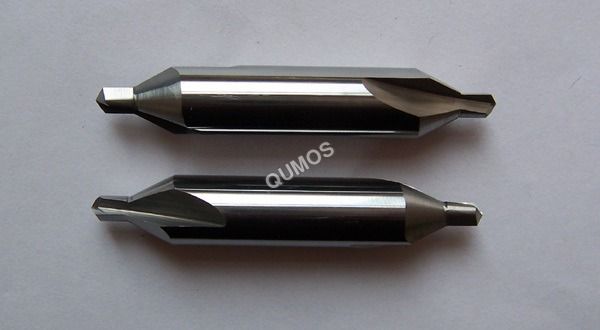
Carbide Centre Drill
Price 253 INR
Minimum Order Quantity : 1 Piece
Tool Type : Carbide Centre Drill
Cutter Type : Centre Drill
Processing Type : Machining
Material : Others, Solid Carbide
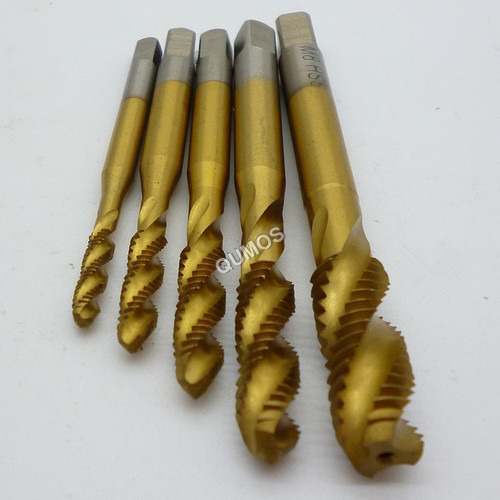
Spiral Fluted Tap
Price 1521 INR
Minimum Order Quantity : 1 Set
Tool Type : Tap
Cutter Type : Spiral Fluted Tap
Processing Type : Internal Threading
Material : Others, High Speed Steel (HSS)

Contact Details
QUMOS ENTERPRISES
GST : 27AAYPU0913C1ZH
- Shop No.1,12, Nagdevi Cross Lane, 70, Mohammedali Road, Mohammedi Manzil,Mumbai - 400003, Maharashtra, India
- Phone :08045803781

 Send Inquiry
Developed and Managed by Infocom Network Private Limited.
